
Relaywardens Melee vs Ranged: Squad Composition
Relaywardens is built on a melee screen feeding a ranged back line. Here is the ratio to run, the units on each side, and when the mix breaks.
Relaywardens has four melee units and four ranged units, and the squad cap forces a choice: you cannot field both at full strength. The ratio that works is one melee body for every two ranged units, which at the starting cap of 30 means ten front and twenty back.
That split is the skeleton of every list in the best build→ guide.
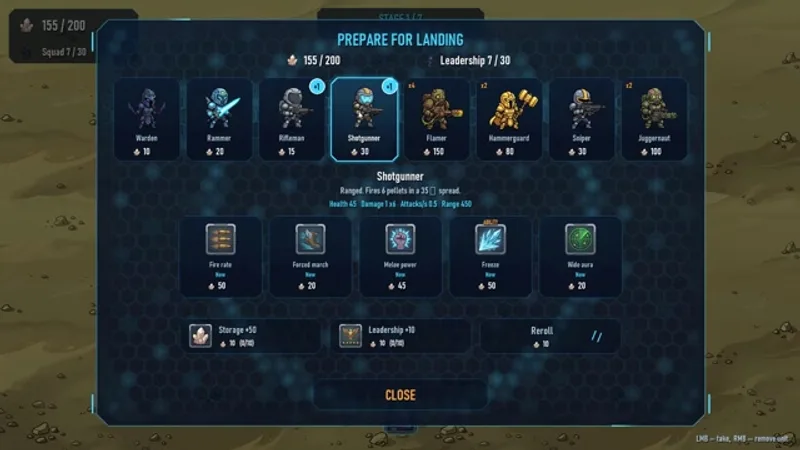
The two halves of the shop
| Melee | Cost | Ranged | Cost |
|---|---|---|---|
| Warden | 10 | Rifleman | 15 |
| Rammer | 20 | Shotgunner | 30 |
| Hammerguard | 80 | Sniper | 30 |
| Juggernaut | 100 | — | — |
The price structure is the first clue. The cheapest card in the game is melee (Warden, 10) and the second cheapest is ranged (Rifleman, 15). The expensive cards are all melee except the Shotgunner and Sniper at 30. In other words: melee is the cheap screen, ranged is the damage. Build accordingly.
Every price and cap in that table is repeated in the unit list→.
Why one to two
A 30-slot squad made entirely of Riflemen has 30 guns and no line. The first melee contact reaches them, and 45-health shooters die in packs. A squad made entirely of Wardens has 30 bodies and no damage; it survives and kills nothing.
The one-to-two ratio comes from how the front line behaves in practice:
- Ten Wardens can hold a lane while twenty Riflemen work.
- Twenty Wardens with ten gunners hold longer but clear too slowly, and the crystal meter stalls.
- Five Wardens with twenty-five gunners clear fast and then collapse on the first jump enemy.
Unit placement is manual — LMB takes a unit, RMB removes it. A screen spread in a circle leaves gaps; a screen in a wedge in front of the guns does not.
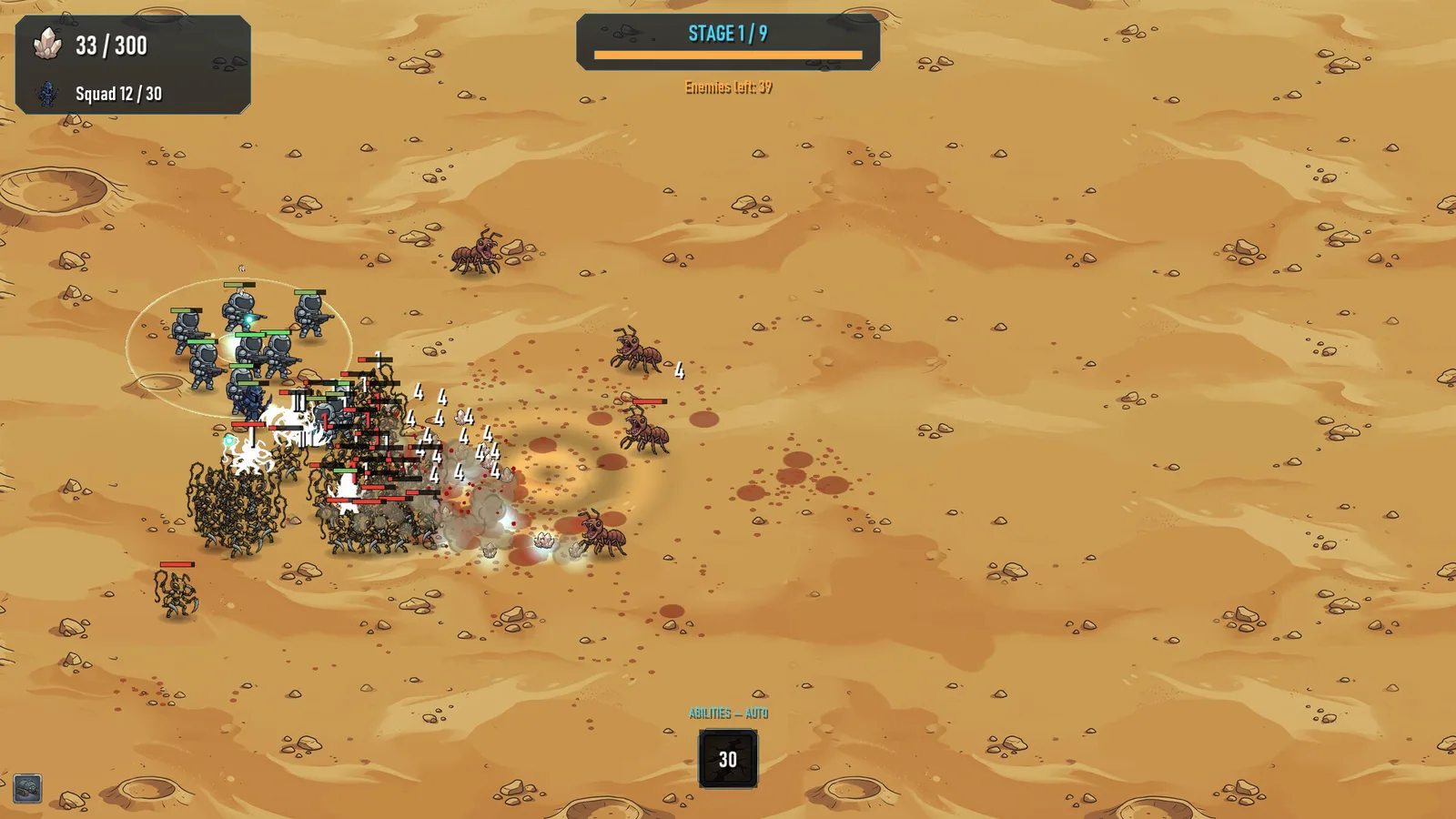
When the mix changes
Moon stages. The eye swarms fly and the ranged squids out-range a base Rifleman. Push the ratio to one to three and add two Snipers. The tier list→ explains why the Sniper is the reach answer.
Fortress stages. One Hammerguard replaces four Wardens, and the ratio looks like one to three again because the anchor does the holding.
Wide stages. An 18-stage planet punishes slow squads. Squad speed +10% free picks matter more than the exact ratio; a fast squad with a thin screen still clears.
Melee damage is a trap for most players
The free upgrade screen offers Melee damage +1 and Ranged damage +1 at the same tier. Unless you are running Rammer and Hammerguard as your damage dealers, ranged damage is the better pick every time, because:
- Ranged units are the majority of your squad.
- Melee units spend most of a fight walking, not hitting.
- The Shotgunner's six pellets scale with a ranged damage stack in a way no melee card does.
The exception is a deliberate melee build: Rammer plus Hammerguard plus Juggernaut, with melee damage stacked and ranged units only for the squids. It is slower and more expensive, and it works.
What the build actually shows
The only full stat card in the shop belongs to a ranged unit — Shotgunner, Health 45, Damage 1x6, Attacks/s 0.5, Range 450, six pellets in a 35-degree spread. The melee cards show role tags and prices but no equivalent numbers, which is a reasonable signal about where the designers expect the damage to come from.
Official source: Steam store page ↗, PlayStation Store listing ↗, Nintendo eShop listing ↗
FAQ
Should I buy melee or ranged units first? Ranged first. A Rifleman at 15 crystals is the cheapest damage in the game, and the free Warden-tier screen comes later.
Can I win with only ranged units? Not past the early stages. Without a screen the shooters get reached, and 45-health units do not survive contact.
Is the Hammerguard worth 80 crystals? On boss stages, yes. It replaces four Wardens in one slot and survives hits that delete them.